






Rooms that won't cool, hot spots upstairs, cold spots downstairs, or weak airflow from certain vents — the problem is almost always poorly designed ductwork, not your HVAC equipment.
Greentech Engineering's duct design in Fort Worth, TX uses Manual D calculations, CAD layouts, and airflow testing to engineer a system that delivers balanced comfort to every room.
Get Your Professional Duct Design Consultation
Once your ductwork is properly designed, fine-tune comfort with our room temperature service in Fort Worth, TX — NCI-certified airflow balancing that ensures every room reaches the right temperature.
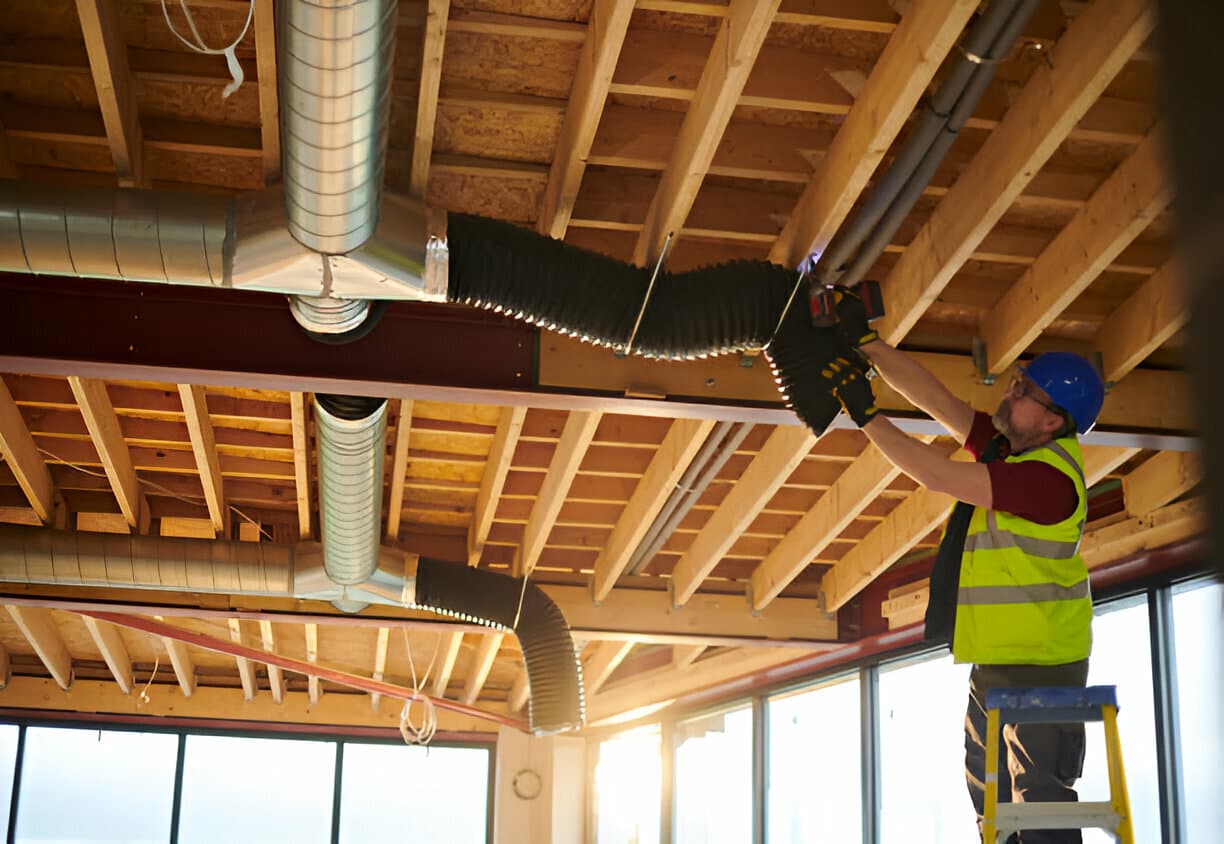
Why professional duct design matters in Fort Worth
- Fort Worth summers drive high cooling loads. Undersized or leaky ducts amplify discomfort and operating costs.
- Many DFW-era homes have constrained attics or retrofitted systems that create airflow restrictions and pressure imbalances.
- New construction trends favor open floor plans and zoning; without careful duct layout these designs often create noise and uneven supply.
- High humidity increases latent load needs, so airflow and return placement must be precise to control both temperature and moisture.
Common duct problems we solve
- Uneven room temperatures and weak supply in bedrooms or living areas
- Excessive duct leakage in attics and crawlspaces that wastes cooled air
- High static pressure causing noisy registers and reduced system capacity
- Oversized or undersized duct runs from equipment changes or DIY retrofits
- Poor return placement and inadequate balancing that causes pressure imbalances and drafts
Our duct design process (what to expect)
- Site assessment and data collection
- Home layout, insulation levels, attic/crawlspace access, and existing duct condition are recorded.
- Existing equipment performance and thermostat zoning are reviewed.
- Load calculation (Manual J)
- We perform Manual J load calculations to determine heating and cooling needs per room, taking Fort Worth climate, sun exposure, and insulation into account.
- Accurate load data prevents oversizing and ensures comfort and efficiency.
- Duct system layout and Manual D sizing
- Using Manual D procedures, we size trunks, branches, and registers to deliver required CFM to each room.
- Layouts prioritize short, straight runs, proper return paths, and register placement for effective airflow and minimal noise.
- Material and insulation selection
- Options include sheet metal mains with flex branches, insulated ductboard, or high-performance flex systems depending on access and budget.
- Insulation choices account for attic temperatures and humidity control; appropriate R-values reduce cooling losses and condensation risk.
- Coordination with equipment selection and zoning
- Duct design is matched to equipment capacity and blower characteristics to manage static pressure and ensure SEER performance.
- Zoning strategies are included when needed — multi-zone dampers, dedicated runs, or variable-speed systems for precise control.
- Installation oversight and testing
- Detailed installation plans and specifications guide contractors to limit twists, sharp bends, and crushes that restrict airflow.
- Post-installation testing includes duct leakage tests (blower door or duct blaster), static pressure checks, and airflow measurements to verify design targets.
- Airflow balancing and commissioning
- Using balometers or pitot surveys, we balance room-by-room airflow and adjust dampers to reach the Manual D targets.
- Results and recommendations are documented so homeowners and service technicians have a clear baseline.
Materials, leakage control, and noise strategies
- Sealing: Mastic and UL-rated tapes are used at seams and connections to reduce leakage — especially important in Fort Worth attics where cooled air loss is costly.
- Insulation: Properly insulated ducts minimize condensation and energy loss. In hot attics, higher-rated duct insulation prevents thermal gain.
- Duct type: Rigid metal trunks reduce air turbulence and noise, while short flex runs can simplify installs. We recommend minimizing flex length and avoiding sharp bends.
- Noise control: Duct silencers, lined plenums, and optimized register placement reduce fan and airflow noise in open-plan Fort Worth homes.
Static pressure, airflow balancing, and performance verification
- Static pressure is measured at the air handler to ensure blower performance matches the duct system. High static indicates restrictions that lower capacity and increase energy use.
- Airflow balancing aligns actual delivered CFM with Manual D targets to eliminate hot/cold spots.
- Verification testing documents leakage rates and system airflow so homeowners know the system meets performance expectations.
Estimated timelines and cost considerations
- Timelines: The design and survey phase typically completes within a few days to a week depending on access and complexity. Installation and commissioning for most single-family homes range from several days to a couple of weeks depending on new construction versus retrofit scope and accessibility.
- Cost drivers: Project cost depends on home size, number of supply and return runs, required materials (metal vs ductboard vs flex), accessibility (attic vs walls), and testing scope. Investing in quality design and sealing reduces long-term energy and service costs commonly seen in Fort Worth climate conditions.
Comfort, efficiency, and long-term benefits
- Proper design improves temperature consistency, reduces runtime and energy consumption, and prolongs equipment life by eliminating excessive cycling and static-related stress.
- Improved humidity control in hot, humid months reduces mold risk and improves indoor air quality.
- Verified, balanced systems are quieter and provide predictable comfort — an important consideration for modern Fort Worth layouts with open living spaces and home offices.
Why choose professional duct design
- Expertise in Manual J and Manual D methods tailored to local climate realities
- Coordination between duct layout and equipment selection to protect efficiency and warranty performance
- Measured, verifiable results through leakage testing, static pressure checks, and airflow balancing
- Documentation that supports future maintenance and system upgrades
FAQs
Q: How does Manual D differ from a simple duct sizing rule of thumb?
A: Manual D uses room-by-room load results from Manual J and accounts for run lengths, fittings, and actual airflow requirements; rule-of-thumb sizing ignores these details and often causes imbalance and inefficiency.
Q: Will a new duct design reduce my energy bills in Fort Worth?
A: Proper design and sealing reduce cooled air losses and system runtime, which lowers energy use; the cooling savings are most noticeable during long summer peaks common in Fort Worth.
Q: How long does duct testing and balancing take after installation?
A: Testing and balancing typically take a few hours to a day for most homes, depending on system complexity and the number of zones or dampers to adjust.
Q: Can duct design solve noisy vents and uneven rooms in older Fort Worth homes?
A: Yes. Addressing duct layout, sizing, sealing, and static pressure through professional design and balancing often eliminates noise and improves airflow to poorly performing rooms.

Flexible Financing Options
Explore our range of flexible financing options designed to suit your needs and budget.