



Rooms that won't cool, hot spots upstairs, cold spots downstairs, or weak airflow from certain vents — the problem is almost always poorly designed ductwork, not your HVAC equipment.
Greentech Engineering's duct design in Forest Hill, TX uses Manual D calculations, CAD layouts, and airflow testing to engineer a system that delivers balanced comfort to every room.
Get Your Professional Duct Design Consultation
Once your ductwork is properly designed, fine-tune comfort with our room temperature service in Forest Hill, TX — NCI-certified airflow balancing that ensures every room reaches the right temperature.
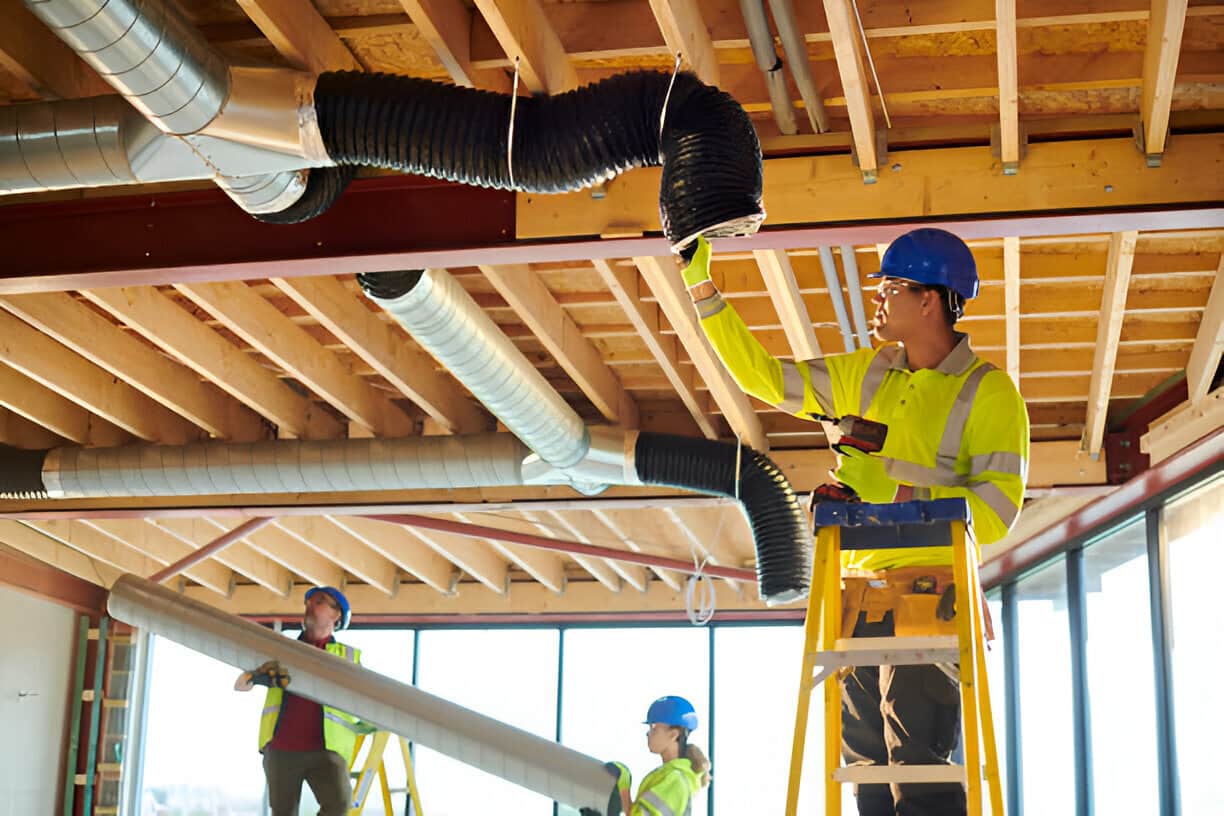
Why duct design matters in Forest Hill, TX
Homes in Forest Hill commonly face high cooling loads in summer, heat gain in attics, and seasonal humidity that can stress HVAC systems. Poorly sized or routed ducts lead to:
- Inadequate airflow and hot rooms during peak summer heat.
- Excessive energy use as equipment runs longer or cycles more frequently.
- Condensation and mold risk where ducts are underinsulated or poorly sealed.
- Noise and drafts from high static pressure or restrictive fittings.
- Professional duct design addresses these problems up front by matching the distribution system to the home and the local climate.
Common duct problems in Forest Hill homes
- Undersized main trunks or supply branches that limit delivered CFM to distant rooms.
- Long attic runs without adequate insulation, increasing cool air heat gain.
- High leakage at joints and transitions causing wasted conditioned air.
- Insufficient return pathways that create negative pressure and draw in humid outdoor air.
- Lack of zoning or balancing for multiuse spaces and differing occupancy patterns.
Green Tech duct design process
Green Tech begins with a site assessment to document building orientation, insulation levels, window solar gain, occupancy patterns, and existing duct layout. The process follows industry standards and produces a buildable plan you can use for installation or retrofit.
Key steps:
- Load calculation using industry methods to determine heating and cooling requirements for each zone.
- Duct system design to size trunks, branches, and returns to deliver required airflow with minimal static pressure.
- Layout planning to optimize routing, reduce fittings, and limit long runs through hot attics or unconditioned spaces.
- Specification of materials and fabrication details for reduced leakage, improved insulation, and long term durability.
- Zoning and balancing strategy to match usage patterns and provide consistent comfort.
- Commissioning plan including airflow verification and pressure testing to confirm performance.
Load calculations and proper duct sizing
Accurate load calculations are the foundation of a reliable duct system. Green Tech uses established methods to size equipment and determine required CFM for each room based on local climate factors such as solar orientation and humidity. Duct sizing follows accepted procedures to maintain target velocities and static pressure limits, avoiding undersizing that starves rooms of airflow or oversizing that increases noise and cost.
Design incorporates return sizing and placement to maintain neutral pressure and to prevent HVAC short cycling. In humid climates like Forest Hill, properly sized returns and balanced flows also help the system control indoor humidity more effectively.
Layout planning for optimal airflow and minimal pressure loss
Good layout minimizes fittings, abrupt turns, and long runs that increase pressure loss. Typical layout considerations include:
- Central trunk placement to shorten branch lengths.
- Locating supply registers in high load areas and mixing registers to avoid stratification.
- Running ducts inside conditioned space where possible to lower thermal loss.
- Using plenums, boots, and turning vanes strategically to maintain airflow without excessive static pressure.
Airflow modeling and ductulator calculations help predict system performance before fabrication so adjustments can be made on paper rather than in the field.
Materials and fabrication options
Material choice affects durability, leakage, and thermal performance. Options include:
- Sheet metal ducts: robust, low leakage when sealed correctly, best for long life and high-performance systems.
- Fabricated fiberglass ductboard: lightweight and insulated, suitable for certain retrofit or new-construction applications.
- Flexible insulated duct: economical and useful for short runs, but must be supported and kept straight to avoid airflow restriction.
- Sealing and insulation: mastic or UL 181 rated tapes, plus R6 or greater insulation for unconditioned attic runs to reduce heat gain.
Green Tech recommends fabrication standards and sealing practices consistent with SMACNA and ACCA guidance to reduce leakage and improve longevity.
Zoning and airflow balancing strategies
Zoning addresses differing comfort needs across a home. In Forest Hill, zoning can limit cooling to occupied areas during hot afternoons or concentrate dehumidification in rooms with high latent loads. Zoning strategies include motorized dampers, multiple thermostats, and variable airflow control. Balancing uses dampers, register adjustments, and measured fan speeds to equalize supply and return flows so each space receives the intended CFM.
Coordination with equipment selection and installation
A duct system only achieves design goals when matched to properly selected equipment. Green Tech coordinates duct design with HVAC equipment selection so that delivered airflow, static pressure limits, and filtration needs align with unit performance. This prevents common mismatches that cause short cycling, reduced efficiency, or premature wear on the system.
Impact on comfort, energy efficiency, and indoor air quality
Well engineered ducts deliver:
- Consistent temperatures across living areas and floors.
- Better humidity control and reduced condensation risk.
- Lower energy use because the system meets loads efficiently and minimizes losses.
- Improved indoor air quality through proper return design and effective filtration placement.
- Long term, good duct design reduces operational costs and extends equipment life while improving occupant comfort.
Commissioning and maintenance advice
Design is only part of the story. Proper commissioning verifies performance with airflow measurements, static pressure checks, and leakage testing. After installation, regular checks of insulation, seals, and register balance are recommended, especially after attic work or renovations. In humid climates, inspect for signs of condensation or mold around ducts and returns.
Green Tech documents design parameters and provides balancing notes and testing results so owners and contractors have a clear record of system intent and verified performance.
FAQs
Q: What standards are used for duct design in Forest Hill, TX?
A: Design follows industry standards such as ACCA Manual J for load calculations, Manual D for duct sizing, and SMACNA guidelines for fabrication and installation, supplemented by modern airflow modeling tools.
Q: How does proper duct design reduce energy bills in a hot, humid climate?
A: Proper design reduces duct leakage and thermal loss, ensures equipment operates at intended airflow and efficiency, and prevents short cycling, all of which lower runtime and energy consumption during high cooling demand.
Q: Which duct materials are best for attics in Forest Hill?
A: Insulated sheet metal with sealed seams is the most durable and lowest leakage option. If using flexible insulated ducts, keep runs short, supported, and straight, and ensure R6 or better insulation for attic exposure.
Q: Will a redesign fix rooms that are always hot or cold?
A: In many cases, yes. A redesign that includes accurate loads, proper return pathways, balanced airflow, and possible zoning will address common causes of persistent hot or cold rooms.
Q: What does commissioning involve after duct installation?
A: Commissioning includes airflow measurements at registers, static pressure checks at the air handler, leakage testing of accessible joints, and adjustments to dampers and registers to achieve design CFM and balanced airflow.

Flexible Financing Options
Explore our range of flexible financing options designed to suit your needs and budget.