





Rooms that won't cool, hot spots upstairs, cold spots downstairs, or weak airflow from certain vents — the problem is almost always poorly designed ductwork, not your HVAC equipment.
Greentech Engineering's duct design in Flower Mound, TX uses Manual D calculations, CAD layouts, and airflow testing to engineer a system that delivers balanced comfort to every room.
Why professional duct design matters in Flower Mound, TX
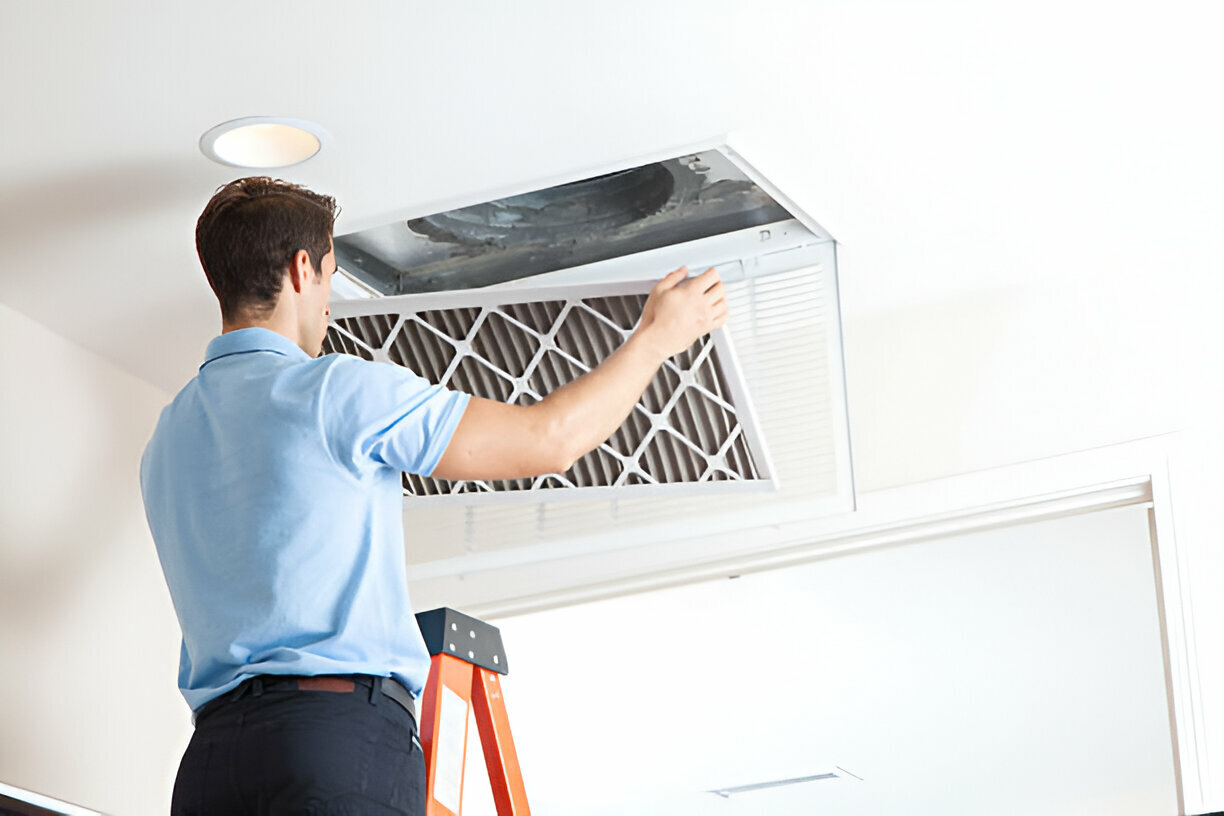
Flower Mound’s hot, humid summers and widely varying attic temperatures make duct performance critical. Poorly sized or routed ducts increase runtime, reduce capacity, and create uneven temperatures across living spaces. For new construction, tight coordination with builders and HVAC installers prevents costly rework. For retrofits, a correct design identifies opportunities to reduce leakage, rebalance airflow, and improve efficiency without unnecessary equipment oversizing.
Once your ductwork is properly designed, fine-tune comfort with our room temperature service in Flower Mound, TX — NCI-certified airflow balancing that ensures every room reaches the right temperature.
What Green Tech includes in duct design services
- Comprehensive load calculations (Manual J) and system sizing (Manual S) to select the correct equipment capacity
- Duct sizing and friction calculations (Manual D or equivalent) for each branch and register
- CAD duct layouts and schematic examples showing trunk, branch, plenum, return locations, and access panels
- Material and insulation specifications for sheet metal, ductboard, and flexible ducts, plus recommended fastening and sealing methods
- Static pressure targets, airflow balancing strategy, and recommendations for fans/air handlers consistent with equipment performance curves
- Solutions tailored for both new construction and retrofit projects, including routing in attics, crawlspaces, or conditioned basements
- Coordination notes for builders, framers, and installers to lock in clearances, chase locations, and required penetrations
- Testing and commissioning procedures and expected deliverables and timelines
Common duct problems we solve (Flower Mound specific)
- Oversized equipment because of missing or inaccurate Manual J data, causing short cycling and humidity issues
- High attic duct heat gain in summer due to uninsulated or poorly sealed ducts
- Excessive static pressure from undersized or convoluted duct runs reducing system airflow
- Imbalanced rooms and poor return paths leading to pressure differentials and drafts
- Retrofit constraints where existing chase locations or slab penetrations force non-ideal routing
The Green Tech duct design process
- Site assessment and data collection
- Verify house orientation, insulation levels, window types, and attic conditions in Flower Mound homes
- Measure existing duct runs for retrofits or review plans for new construction
- Load and equipment selection
- Perform Manual J and Manual S calculations to establish precise heating and cooling loads and choose equipment that matches those loads
- Duct layout and sizing
- Create Manual D or equivalent friction-based duct sizing for trunk and branches using CAD
- Optimize runs to minimize long, high-loss flexible duct sections in hot attics and reduce elbow counts
- Material and insulation specification
- Recommend Type 26 or 28 gauge spiral or rectangular sheet metal for long trunks where low leakage and rigidity are priority
- Specify insulated flex or ductboard solutions where necessary, with minimum R-values recommended for attic ducts to limit heat gain and condensation risk
- Recommend sealing methods such as mastic or UL 181-rated tapes and gasketing at equipment connections
- Coordination and plan review
- Provide installer-ready drawings, equipment schedules, material takeoffs, and framing/core drill locations for new builds
- Commissioning and testing
- Verify system airflow with airflow capture and hood measurements at registers, measure external static pressure at the air handler, and perform duct leakage testing where applicable
- Balance airflows using adjustable dampers and document final supply/return CFM values
Static pressure and airflow balancing considerations
- Target overall system external static pressure is established from the equipment curve; we size the duct system to meet those targets so fan performance is not compromised
- Typical goals include ensuring adequate supply CFM per room based on load and keeping total duct resistance low to prevent high energy use
- Balancing includes register-by-register adjustments, return path verification, and mitigating bypasses that adversely affect humidity control in Flower Mound’s climate
Materials, insulation, and sealing recommendations
- Use rigid sheet metal trunks for main runs where possible to minimize leakage and maintain shape under negative pressure
- For attic runs, specify insulated ducts with R-values appropriate for Texas summers to reduce heat gain; consider R6 or higher where attic temperatures routinely exceed outdoor ambient
- Seal all joints with approved mastic or UL 181 tape and mechanically fasten transitions to resist thermal cycling
- Protect flexible ducts from compression and avoid excessive bends; keep flex runs short and properly supported
New construction vs retrofit solutions
- New construction: Provide full coordination packages that include duct chase locations, space for plenums, and pre-punched openings so installers hit design airflow with minimal changes
- Retrofit: Field-verify existing conditions, propose route alternates to shorten runs or relocate returns, and quantify expected energy or comfort improvements from sealing, insulating, or rerouting
Testing, commissioning, and typical deliverables
Deliverables:
- Manual J, S, and D calculation reports
- CAD layout drawings (DWG and PDF), schematic airflow diagrams, and equipment schedules
- Materials list and insulation specifications
- Commissioning report including measured static pressures, register CFM, balancing adjustments, and leakage test results
Testing and commissioning:
- Register airflow verification and balancing
- External static pressure at the air handler and comparison to design target
- Duct leakage testing where required or recommended, with repair recommendations
- Final commissioning report that documents system performance and any recommended corrective actions
Typical timelines:
- Simple retrofit design and report: 1 to 2 weeks including one field visit
- New construction duct design and coordination package: 1 to 3 weeks depending on plan complexity and revision cycles
- On-site commissioning and balancing: typically a half day to a full day per system, plus a final report day
Benefits of proper duct design for Flower Mound homes
- More consistent temperatures room to room and better humidity control during hot months
- Reduced runtime and improved equipment life by matching fan curves to properly sized ducts
- Lower utility costs through reduced leakage and heat gain
- Fewer callbacks and field changes during construction with coordinated design and installer-ready documentation
Green Tech combines practical HVAC experience with engineering-grade calculations so your ductwork delivers on comfort and efficiency expectations in Flower Mound, TX. Our approach is detailed, verifiable, and tailored to local climate challenges and construction practices.
FAQs
Q: What documents will I receive after a duct design?
A: You will receive Manual J/S/D calculation reports, CAD layout drawings in PDF and DWG, equipment schedules, material takeoffs, and a commissioning report if testing is performed.
Q: How long does a typical duct design take for a new home in Flower Mound?
A: Typical new construction duct design and coordination package delivery is 1 to 3 weeks depending on plan completeness and the number of revision cycles.
Q: Will a duct design reduce my energy bills?
A: Yes. Properly sized and sealed ducts reduce heat gain and fan energy, improve system runtime efficiency, and help equipment operate at intended efficiency levels, which can lower energy use.
Q: Do you design for retrofit projects with limited attic space?
A: Yes. Retrofit designs start with a field verification and propose routing revisions, targeted sealing and insulation upgrades, and realistic expectations for achievable airflow improvements.
Q: What testing do you perform at commissioning?
A: We typically measure register airflow (CFM), total external static pressure at the air handler, and perform duct leakage testing when warranted; results are documented in a commissioning report.

Flexible Financing Options
Explore our range of flexible financing options designed to suit your needs and budget.