


Rooms that won't cool, hot spots upstairs, cold spots downstairs, or weak airflow from certain vents — the problem is almost always poorly designed ductwork, not your HVAC equipment.
Greentech Engineering's duct design in Farmersville, TX uses Manual D calculations, CAD layouts, and airflow testing to engineer a system that delivers balanced comfort to every room.
Get Your Professional Duct Design Consultation
Once your ductwork is properly designed, fine-tune comfort with our room temperature service in Farmersville, TX — NCI-certified airflow balancing that ensures every room reaches the right temperature.
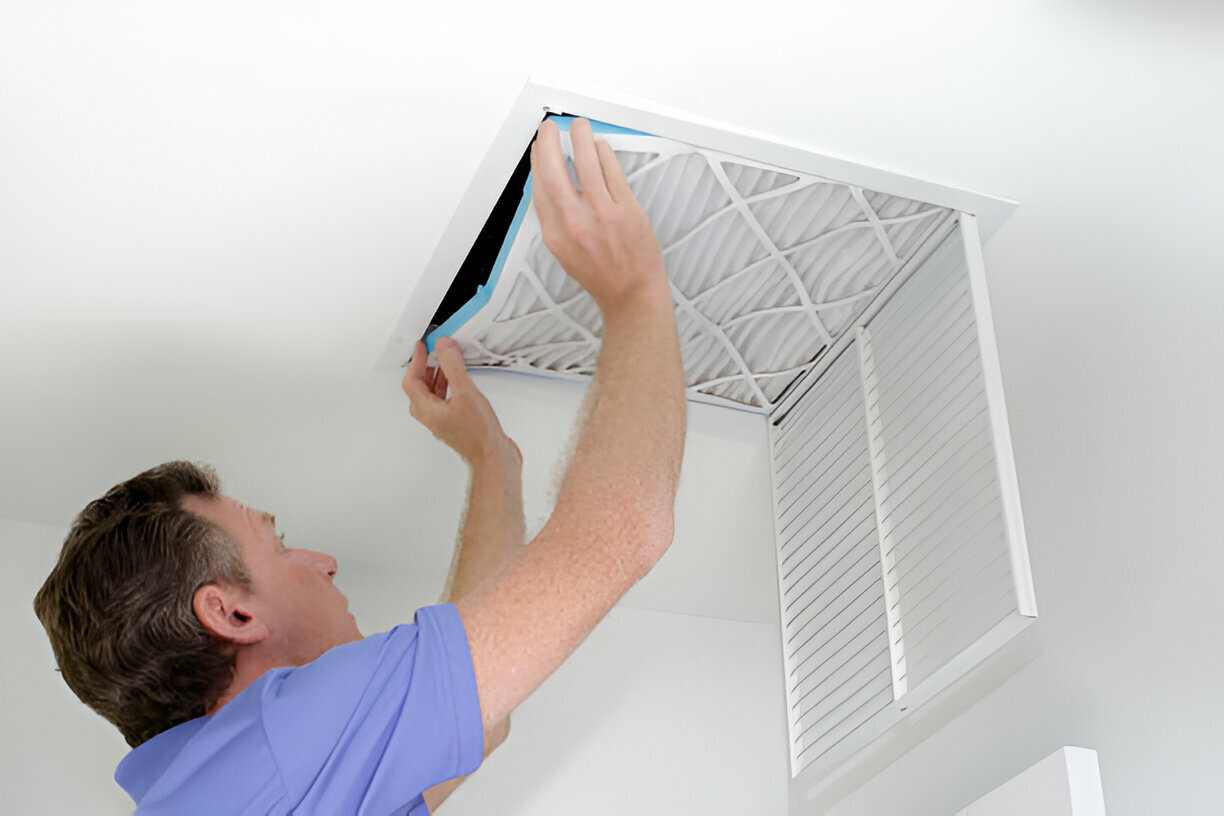
Why professional duct design matters in Farmersville homes
- Texas heat and high humidity increase cooling loads and make moisture control critical. Poorly sized or leaky ducts amplify these problems.
- Many area homes have long attic runs, slab foundations, or older ductwork that was never sized to modern standards, leading to pressure imbalances, hot rooms, and higher operating costs.
- Proper duct design reduces noise, eliminates drafts, improves indoor air quality, and helps newer high-efficiency equipment reach its rated performance.
Green Tech approaches each project with region-specific considerations so your system performs well in local climate conditions and typical Farmersville building types.
Common duct design services and issues we solve
- Load calculations (Manual J) to determine accurate heating and cooling requirements for each room and orientation.
- Manual D duct sizing to produce branch and trunk sizes that deliver required CFM without excessive velocity or pressure drop.
- System layout and material recommendations for new construction and retrofits (sheet metal, insulated flex, rigid fiberglass where appropriate).
- CAD planning deliverables: scaled plans, duct schematics, register schedules, and fabrication takeoffs.
- Leakage minimization strategies: sealing methods, transitions, and return design to control infiltration and pressurization.
- Coordination with HVAC equipment selection (Manual S guidance) to align duct performance with the chosen air handler or furnace.
- Commissioning and air-balancing tests: measured CFM, static pressures, and damper settings documented for final acceptance.
- Code compliance and energy-efficiency assessments to meet local requirements and improve operating costs.
Our duct design process (what you can expect)
- Site evaluation and data gathering
- We survey the home or construction plans, note orientation, insulation levels, existing duct locations, and special needs (zoning, IAQ equipment, attic access).
- Typical duration: 1 day for on-site assessment or plan review.
- Load calculations and system selection
- Using Manual J inputs (insulation, window areas, occupancy, orientation) we size the heating and cooling load and recommend matched equipment.
- This step prevents oversizing, which in Farmersville’s humid summers can cause short cycling and poor dehumidification.
- Manual D duct sizing and layout
- We create trunk-and-branch layouts sized to deliver the required CFM to each register while limiting velocity and static loss.
- Deliverables include CAD drawings, register schedules, and a material list for fabrication.
- Leak control and constructability review
- Design incorporates sealed connections, pressure-tested transitions, and recommended materials (rigid where straight runs permit, insulated flex in tight areas).
- We flag areas prone to leakage (attic penetrations, long runs) and specify sealing methods such as mastic and high-quality tapes.
- Installation coordination and oversight
- For new builds or retrofits, the design file helps installers and sheet metal shops fabricate ductwork accurately and efficiently.
- We work with contractors to ensure fittings, boots, and insulation follow the design intent.
- Commissioning and air balancing
- After installation, we measure supply and return CFM, check static pressures, and adjust dampers to match the design.
- Final documentation includes measured values and any adjustment notes to guarantee performance.
Typical timeline from initial survey to final balancing is project-dependent: small residential projects often complete design and installation coordination in 1 to 3 weeks; larger homes or multi-zone systems may take 3 to 6 weeks from start to commissioning.
Strategies to minimize leakage and improve airflow
- Specify continuous air barriers at connections and transitions with mastic and mechanical fastening plus foil tape for flexible ducts.
- Use properly sized boots and high-quality registers to avoid choked flows and noise.
- Minimize turns and long flexible duct runs in attics; when unavoidable, increase duct diameter to reduce pressure loss.
- Design dedicated return paths for each floor or zone to prevent pressure imbalances and reduce dust infiltration.
- Include access panels at key fittings for future inspection and cleaning.
These practical measures reduce energy loss and help air handlers operate within their intended static pressure range, improving longevity and comfort.
Coordination with equipment selection and code compliance
Duct performance and equipment selection are interdependent. Green Tech aligns Manual J loads, Manual D ductwork, and Manual S equipment sizing to ensure the chosen air conditioner or heat pump can deliver designed airflow without excessive pressure drops. Designs conform to ACCA/industry standards and local code requirements, and we document compliance within our CAD deliverables so builders and permitting authorities have clear records.
Benefits of proper duct design for Farmersville homeowners
- More consistent temperatures and reduced hot/cold spots across rooms.
- Lower operating costs through improved efficiency and reduced run-time.
- Better humidity control during hot Texas summers due to correct run times and airflow.
- Quieter operation and improved indoor air quality with reduced leakage and balanced returns.
- Fewer callbacks and longer equipment life when systems operate as engineered.
Green Tech provides the technical deliverables and field verification necessary to realize these benefits for both new construction and retrofit projects in Farmersville.
Maintenance and long-term considerations
- Periodic duct inspections and occasional resealing in older homes help maintain performance, especially after attic work or renovations.
- Changing filters on schedule and ensuring clear return paths keeps designed airflow intact.
- If adding equipment (e.g., a zone system or air cleaner), reconfirm duct capacity and make adjustments to dampers or branch sizing as needed.
Green Tech integrates maintenance-minded details into every design so systems remain serviceable and efficient over time.
FAQs
Q: What is the difference between Manual J and Manual D?
A: Manual J calculates the heating and cooling loads for the structure. Manual D uses those loads to size and lay out the duct system to deliver the required airflow to each room.
Q: Will a new duct design work with my existing HVAC equipment?
A: It depends. We evaluate existing equipment performance during the load and duct assessment and recommend either duct modifications, equipment replacement, or combined adjustments based on measured static pressure and airflow targets.
Q: How do you verify ducts after installation?
A: Verification includes static pressure checks, measured supply and return CFM at registers, damper adjustments, and a final air balance report documenting that each space receives its design airflow.
Q: Can duct sealing and insulation fix comfort issues in older Farmersville homes?
A: Often yes. Sealing leaks, adding insulation, and correcting return paths can substantially improve comfort and efficiency. In some cases, resizing or reconfiguring branches is also necessary for full performance.
Q: Do you provide CAD drawings and material lists?
A: Yes. Our standard deliverables include scaled CAD duct layouts, register schedules, and a fabrication/material takeoff to guide installers and sheet metal shops.

Flexible Financing Options
Explore our range of flexible financing options designed to suit your needs and budget.