




Rooms that won't cool, hot spots upstairs, cold spots downstairs, or weak airflow from certain vents — the problem is almost always poorly designed ductwork, not your HVAC equipment.
Greentech Engineering's duct design in Dfw Area, TX uses Manual D calculations, CAD layouts, and airflow testing to engineer a system that delivers balanced comfort to every room.
Get Your Professional Duct Design Consultation
Once your ductwork is properly designed, fine-tune comfort with our room temperature service in Dfw Area, TX — NCI-certified airflow balancing that ensures every room reaches the right temperature.
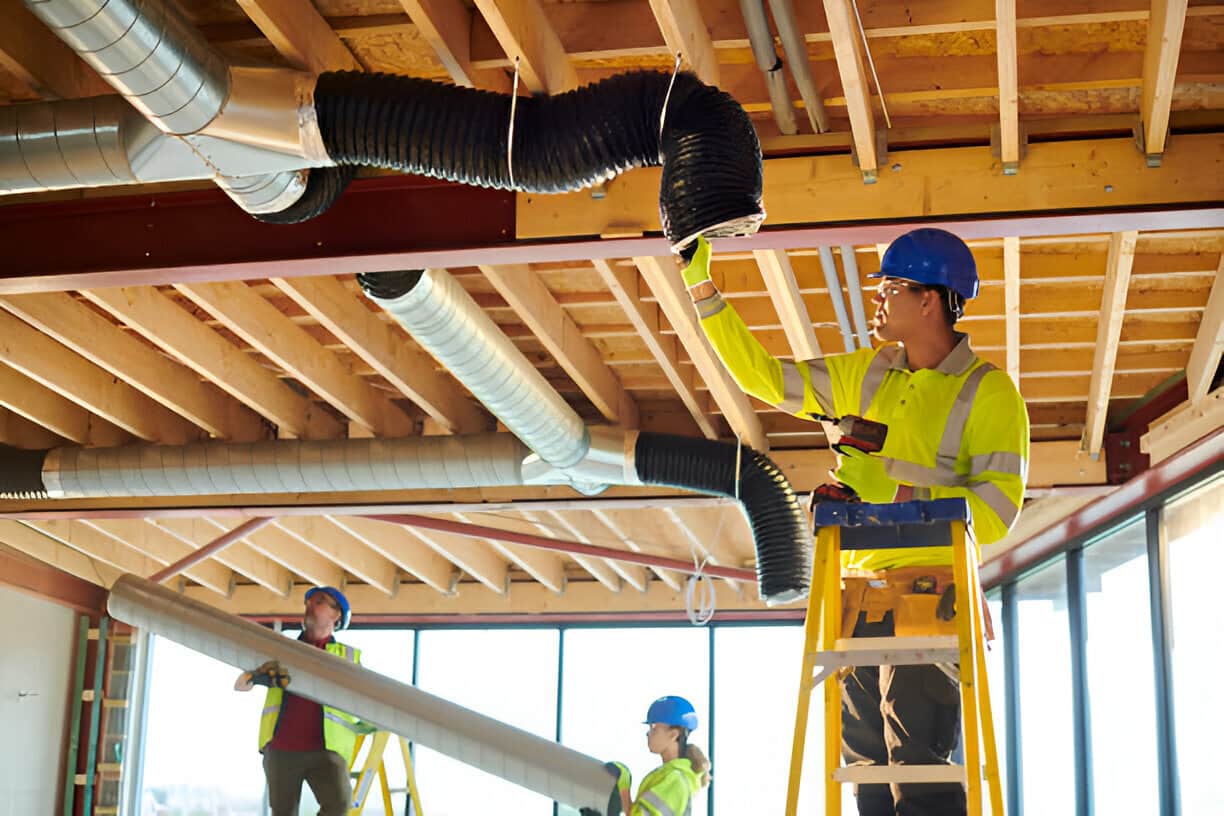
Common duct design issues in DFW Area homes and buildings
- Undersized or oversized ducts causing poor airflow, short cycling, or reduced equipment life
- Excessive static pressure from convoluted layouts or undersized return paths
- Leaks and poor sealing that increase energy use and humidity problems during humid months
- Improper zoning or diffuser placement that creates hot and cold spots
- Inadequate material selection for attic or unconditioned spaces leading to condensation or thermal loss
Addressing these problems begins with a professional duct design process that considers DFW climate, local construction practices, and the type of building involved.
Our duct design process: what we model and deliver
Green Tech follows an engineering-first workflow that transforms building data into a validated duct system plan.
- Load calculations and airflow modeling
- Perform heating and cooling load calculations for each conditioned zone using room-by-room methods.
- Use airflow modeling to determine supply and return requirements, balancing design airflow with equipment capacity to avoid high static pressure and noise.
- Duct sizing and layout plans
- Size main trunks, branches, and returns using industry-standard sizing methods matched to equipment external static pressure limits.
- Develop CAD-ready layout plans showing routes, access requirements, elbows and takeoff locations, and diffuser/register placement optimized for performance and serviceability.
- Material selection
- Recommend appropriate materials based on location and use: rigid sheet metal for long runs and commercial systems, flexible ducts for short, simple runs, and insulated ductboard for conditioned spaces where appropriate.
- Specify insulation, vapor barriers, and protective measures for attic or unconditioned spaces to prevent condensation during humid summers.
- Coordination with HVAC equipment and architecture
- Verify compatibility with furnaces, air handlers, and rooftop units including coil face velocities, external static pressure allowances, and coil bypass considerations.
- Coordinate with framing, ceiling plenums, and other trades to avoid clashes and maintain access for future maintenance.
- Performance testing and commissioning plan
- Include static pressure targets, airflow balancing sequences, and recommended test points.
- Provide documentation for commissioning: TAB sheets, as-built plans, and recommended acceptance criteria.
Performance testing: what we verify
- Static pressure measurement at key points to ensure the system operates within the equipment manufacturer limits.
- Airflow balancing to confirm each zone receives the design CFM within allowable tolerances.
- Duct leakage testing recommendations to minimize conditioned air loss and moisture infiltration in the DFW humid climate.
- Measurement-based selection of fan speeds and control settings to optimize runtime and comfort.
Energy efficiency and code compliance
DFW Area buildings face both hot humid summers and regulatory pressure to minimize energy use. Green Tech’s designs emphasize:
- Right-sizing ducts and equipment to avoid oversized systems that waste energy and undersized systems that struggle.
- High-quality sealing and insulation in attic and unconditioned spaces to reduce sensible and latent loads.
- Zoning and control strategies to limit conditioning to occupied spaces.
- Compliance with local building and energy codes, ventilation standards, and municipal amendments. Designs consider regional requirements and common municipal interpretations used across Dallas and Fort Worth jurisdictions.
Materials and when to use them
- Rigid sheet metal: Best for commercial projects and long main trunk runs where durability and low leakage matter.
- Flexible duct: Appropriate for short, simple runs to registers in residential ceilings when installed with proper support and limited length.
- Insulated ductboard: Useful in some conditioned plenums or when noise damping and insulation are both priorities, provided it meets local code for fire and air quality.
- Selecting the right material reduces pressure losses, lowers noise, and prevents moisture problems common in DFW humid summers.
Timeline and typical deliverables
Deliverables are presented in an organized package that supports construction and commissioning:
- Initial site review and requirements summary
- Load calculation report and zone-by-zone CFM schedule
- CAD-based duct layout and details for install
- Material schedule and equipment coordination sheets
- Commissioning plan and testing protocol
Typical timelines:
- Residential projects: 1 to 3 weeks from site data to final drawings depending on scope
- Small commercial projects: 2 to 6 weeks including equipment coordination and multiple review cycles
- Larger or phased commercial projects: schedule aligned with design milestones and construction sequencing
Portfolio highlights (examples)
- Midrise apartment retrofit in Fort Worth: Redesigned return paths and balanced airflow across stacked units to eliminate persistent humidity and hot spots; included airtight connections and upgraded register placement for even distribution.
- Suburban new build in Plano: Full load calculation and duct layout optimized for high summer latent loads; specified insulated duct in attic and short flex runs to registers to keep noise and thermal losses low.
- Retail tenant improvement in Arlington: Coordinated rooftop unit selection with duct sizing and custom transition details to fit structural constraints while maintaining low static pressure and acoustic comfort.
Long term benefits of professional duct design
- Improved occupant comfort with balanced temperatures and reduced noise
- Lower utility bills through reduced fan energy and better system efficiency
- Increased equipment life by keeping systems within operating design conditions
- Reduced moisture and indoor air quality problems by minimizing leakage and ensuring proper ventilation
FAQs
Q: What information do you need to start a duct design for my DFW home?
A: Basic building plans, equipment type and capacity if known, room dimensions and intended use, details about attic and plenums, and any project constraints. A site visit is often recommended for the most accurate design.
Q: How critical are load calculations for DFW Area buildings?
A: Very critical. DFW humidity and temperature swings significantly affect equipment sizing and duct airflow needs. Accurate load calculations prevent oversized equipment and ensure proper dehumidification.
Q: Will a new duct design reduce my energy bills?
A: Properly designed and sealed ducts reduce fan and compressor runtime and prevent conditioned air loss. Combined with right-sized equipment and proper commissioning, you should see noticeable efficiency improvements.
Q: Do you handle commissioning and testing on site?
A: Designs include a commissioning plan and test criteria. Green Tech can coordinate or provide on-site testing for static pressure, airflow balancing, and leak assessments as part of the acceptance process.

Flexible Financing Options
Explore our range of flexible financing options designed to suit your needs and budget.