






Rooms that won't cool, hot spots upstairs, cold spots downstairs, or weak airflow from certain vents — the problem is almost always poorly designed ductwork, not your HVAC equipment.
Greentech Engineering's duct design in Balch Springs, TX uses Manual D calculations, CAD layouts, and airflow testing to engineer a system that delivers balanced comfort to every room.
Get Your Professional Duct Design Consultation
Once your ductwork is properly designed, fine-tune comfort with our room temperature service in Balch Springs, TX — NCI-certified airflow balancing that ensures every room reaches the right temperature.
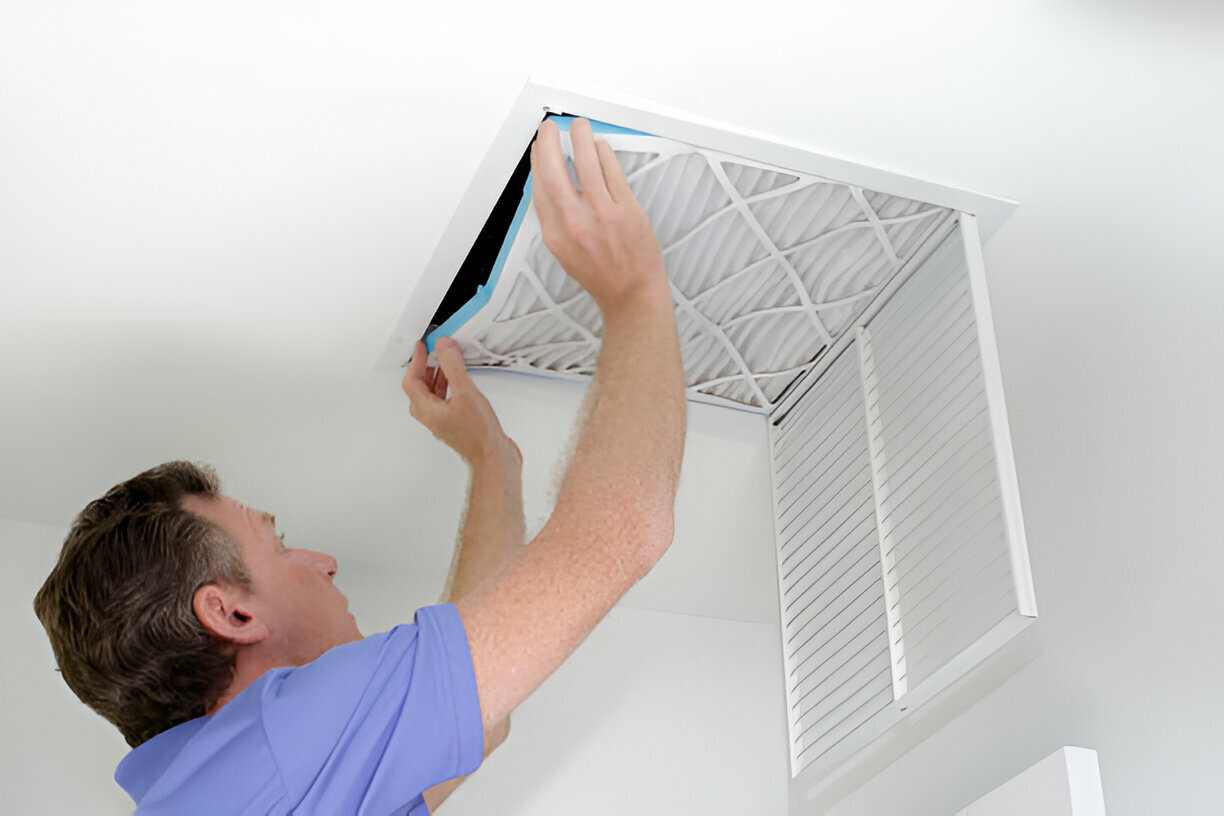
Why specialized duct design matters in Balch Springs
- Balch Springs climate produces large cooling loads most of the year. Oversized or poorly routed ducts worsen humidity control and increase run times.
- Many local homes have ductwork in hot attics or tight retrofit spaces. Heat gain and leakage from attic ducts dramatically reduce cooling efficiency unless ducts are insulated and sealed correctly.
- Older or mismatched equipment is common in retrofit projects. Correct duct sizing and layout protects equipment from high static pressure and poor airflow that can cause coils to freeze or compressors to short cycle.
Typical duct problems we solve
- Undersized or oversized ducts that create high static pressure or low airflow
- Excessive leakage at seams, boots, and register connections
- Long, convoluted runs and poor supply/return placement causing hot/cold spots
- Flexible duct sagging or crushed runs that restrict flow
- Mismatched system components (coil, blower, duct) that reduce efficiency
- Inadequate return air pathways leading to negative pressure and dust infiltration
Our duct design process
- On-site survey and system audit
- Measure existing equipment, coil sizes, blower performance, attic conditions, and current static pressure and airflow where applicable.
- Identify restricted returns, register locations, and the building envelope characteristics that affect loads.
- Manual J (load) calculation
- Calculate room-by-room heating and cooling loads using local weather data, insulation levels, window orientation, and occupancy.
- Use these loads to size the overall equipment capacity and determine design airflow targets for each zone.
- Manual D (duct) calculation and layout
- Produce a duct layout that provides required CFM to each room with acceptable velocities and minimal noise.
- Size trunks, branches, and takeoffs for balanced airflow while limiting external static pressure. Typical design targets use roughly 350 to 450 CFM per ton as a baseline depending on system and coil selection.
- Material and sealing specification
- Recommend appropriate materials for the project: galvanized sheet metal for main trunks where feasible, insulated flexible duct for short branch runs, and rigid duct board where specified.
- Specify insulation levels suited for Balch Springs (for ducts in unconditioned spaces we recommend R-6 to R-8 insulated ducts and sealed plenums).
- Detail sealing methods: mastic at seams, UL 181-rated tape for flexible duct connections, and mechanical fasteners with mastic for sheet metal.
- Integration and compatibility checks
- Verify blower curves, coil pressure drop, and equipment performance to ensure the proposed duct system does not cause excessive static pressure.
- Recommend modifications when retrofitting existing equipment, such as adjusting blower speed, replacing coils, or adding an air handler better matched to the duct system.
- Testing, balancing, and verification
- Perform static pressure testing and register-by-register airflow measurement.
- Provide an airflow balancing report and adjust dampers or diffusers to meet design targets.
- Use tracer testing where needed to locate leakage and validate sealing.
Materials, sealing, and leakage reduction strategies
- Use sealed sheet metal for main trunks when space allows; it reduces leakage and long-term maintenance.
- Install flexible duct only with proper support, straight runs, and no sharp bends; seal all connections with mastic or UL 181 tape.
- Insulate ducts in attics to R-6/R-8 values and ensure insulation is continuous across splices and boots to reduce heat gain.
- Aim to minimize total duct leakage. Practical targets for retrofit projects are often reduction to single-digit percentage of system airflow; aerosol duct sealing can be considered when access is limited.
- Protect against condensation with proper insulation, vapor barriers where needed, and correct slope on horizontal runs.
Typical deliverables
- Complete Manual J load report showing room-by-room loads and design conditions specific to Balch Springs weather data
- Manual D duct layout drawings with sized trunks, branch runs, takeoffs, and register locations
- Materials and workmanship specifications including insulation, sealants, and fastening methods
- Installation guidance describing preferred routing, support spacing, and transition details for contractors
- Post-installation testing reports: static pressure readings, register-by-register CFM, and a balancing summary
Benefits of professional duct design
- Improved comfort: more even temperatures, fewer hot or cold rooms, and better humidity control during Balch Springs summers
- Lower energy bills: reduced runtime and less wasted conditioned air from leakage or heat gain
- Quieter operation: proper velocities and duct sizing cut noise from registers and blowers
- Equipment longevity: correct static pressure and airflow reduce strain on compressors and blowers
- Faster troubleshooting: clear plans and test reports simplify maintenance and future upgrades
Maintenance and performance tips for Balch Springs homes
- Inspect attic ducts annually for sag, disconnected joints, or degraded insulation after summer heat cycles.
- Keep return pathways unobstructed and ensure returns are properly sized—blocked returns increase system imbalance and dust.
- Re-check static pressure and airflow after major changes such as adding insulation, remodeling, or replacing equipment.
- Consider zoning or additional returns for multi-level homes where cooling loads differ significantly between floors.
Why Green Tech for duct design
Green Tech brings engineering-focused HVAC experience to Balch Springs projects, combining precise Manual J and D analysis with practical installation guidance and field testing. Our approach bridges the gap between calculation and installation so the finished system delivers measurable comfort and efficiency in the specific climate and building conditions of Balch Springs.
FAQs
Q: What is the difference between Manual J and Manual D?
A: Manual J determines the heating and cooling loads for each room so equipment is sized correctly. Manual D uses those loads to size and lay out the duct system to deliver the required airflow to each room.
Q: Can you design ducts for a retrofit where existing ducts are in the attic?
A: Yes. Retrofit designs account for attic heat gains, recommend insulation upgrades and sealing, and optimize routing to reduce runs and leakage while improving airflow and humidity control.
Q: How do you verify a duct design after installation?
A: Verification includes measuring total and branch static pressure, register-by-register airflow (CFM), and a balancing report. We also inspect sealing and insulation to ensure performance meets the design targets.
Q: What materials and sealing methods work best for hot, humid climates like Balch Springs?
A: Galvanized sheet metal for trunks, properly supported insulated flexible ducts for branches, R-6 to R-8 insulation in unconditioned spaces, and durable sealing with mastic and UL 181-rated tape are recommended to limit heat gain and leakage.

Flexible Financing Options
Explore our range of flexible financing options designed to suit your needs and budget.