




Rooms that won't cool, hot spots upstairs, cold spots downstairs, or weak airflow from certain vents — the problem is almost always poorly designed ductwork, not your HVAC equipment.
Greentech Engineering's duct design in Anna, TX uses Manual D calculations, CAD layouts, and airflow testing to engineer a system that delivers balanced comfort to every room.
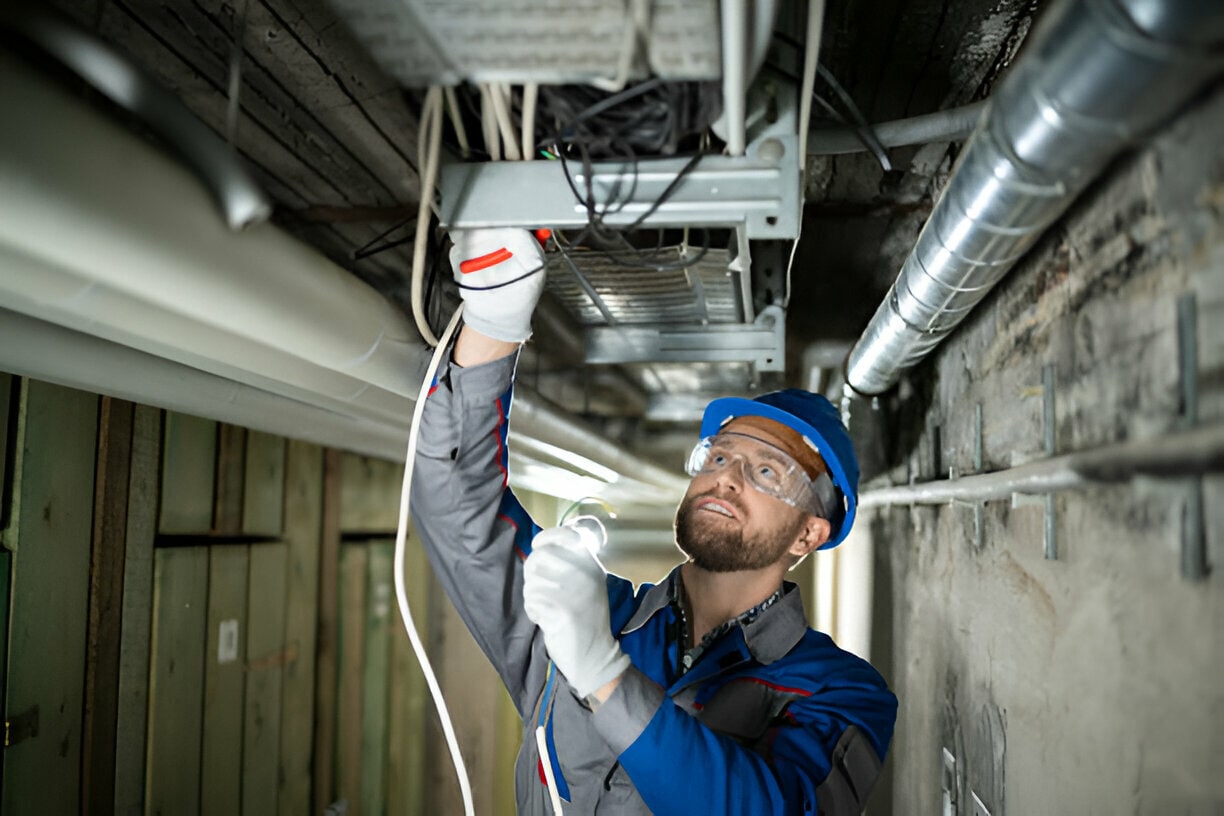
Common duct design issues in Anna, TX homes
- Undersized or oversized ducts that cause poor airflow, noise, or short cycling
- Long uninsulated runs through hot attics leading to high loads and reduced dehumidification
- Poorly located returns and bedroom supply balancing that create uneven comfort
- High static pressure from restrictive fittings, filters, or undersized trunks
- Leaky connections and seams that lower system efficiency and stress equipment
Load calculation and Manual D planning
Accurate design starts with a room-by-room heat gain and heat loss calculation (Manual J). This accounts for local solar exposure, window orientation, insulation levels, envelope tightness, and occupancy patterns typical for Anna homes. From the verified load, Manual D provides the duct layout and sizing: trunk-and-branch or extended plenum designs, required CFM per room, register placement, and recommended velocities.
Green Tech emphasizes matching duct capacity to the equipment selected so the air handler operates within designed static pressure limits. We document assumptions—insulation levels, window solar gain, and equipment performance—so the duct plan aligns with the chosen HVAC unit.
Efficient layout and sizing strategies
- Prioritize short, straight runs and central trunk placement to reduce friction and pressure loss
- Use progressive sizing from main trunk to branches to maintain even velocities and quiet operation
- Limit velocities in supply trunks and registers to reduce noise and increase delivery of conditioned air
- Balance supply and return paths with adequate return grille sizing and multiple return locations in larger homes
- Consider duct routing through conditioned space (conditioned crawlspaces, interior soffits) when feasible to reduce thermal losses common in attic runs
Material choices and insulation
- Sheet metal: durable, low leakage when sealed and ideal for higher-velocity trunks and long-term performance
- Flexible duct: appropriate for short, simple runs; avoid long, sagging or highly convoluted installations
- Duct board: useful for noise control and compact spaces but requires careful sealing and support
- Insulation: in Anna’s climate, insulated ducts routed through unconditioned attics should use appropriate thermal insulation to limit heat gain and humidity transfer. Select insulation with a proper vapor retarder and ensure seams are sealed to prevent condensation and energy loss
New construction versus retrofit considerations
New construction allows optimal trunk location, dedicated return chases, and easier access for appropriately sized plenums. Retrofit projects often require creative solutions: converting attic space to conditioned return plenums, adding short runs of duct in conditioned spaces, or isolating and sealing existing systems to mitigate leaks. Green Tech evaluates tradeoffs to recommend the most cost-effective path that achieves comfort and efficiency targets.
Static pressure, airflow balancing, and integration with zoning
Design targets include keeping total external static pressure within manufacturer recommendations so equipment runs efficiently and reliably—typical targets are modest and chosen per air handler specs. Properly sized ducts and low-resistance fittings reduce static pressure. For homes needing multiple zones, we integrate motorized dampers and zoning controls or specify multi-stage/variable-speed equipment to maintain CFM delivery while allowing independent temperature control. We avoid improper bypass strategies that compromise humidity control in Texas summers.
Testing and verification: leak testing and airflow measurements
Design is only as good as its execution. Key verification steps include:
- Duct leakage testing to quantify and correct leaks at plenum connections and seams
- Airflow measurements at registers and at the unit to confirm CFM matches Manual D targets
- Static pressure readings across the system to validate equipment operating point
- Temperature and humidity checks to confirm dehumidification and sensing performance
These tests ensure the installed system meets the intended comfort and efficiency objectives for Anna homes.
Energy-efficiency benefits
A properly designed duct system lowers cooling and heating energy use, improves humidity control during hot, humid months, and reduces on-off cycling that stresses compressors and blowers. Well-sealed and insulated ducts also protect indoor air quality by minimizing infiltration of attic dust and allergens common in North Texas.
Project timeline and cost considerations
Typical project phases and rough durations:
- Initial site assessment and load calculations: a few days to one week depending on documentation and site access
- Duct layout and shop drawings: several days to a week for detailed plans
- Material procurement and scheduling: one to two weeks for standard projects
- Installation and commissioning: a few days for a single-family home; larger homes may take longer
- Factors that influence project cost (no specific prices provided) include system size, new-construction versus retrofit complexity, choice of materials, number of zones, accessibility of duct pathways, and the extent of testing and balancing required. Green Tech provides transparent documentation of scope, materials, and testing requirements so budgets align with performance outcomes.
Anna, TX-specific examples of completed designs
- New subdivision build: Central trunk routed through conditioned attic space with short branch runs to bedrooms, sealed sheet metal main trunk, and flex branches to reduce attic exposure—improved whole-house dehumidification during peak summer.
- Historic farmhouse retrofit: Reworked return strategy and added a sealed duct trunk in a conditioned crawlspace, replaced leaking duct segments, and rebalanced airflow to eliminate hot spots in upper floors.
- Open-plan modern home: Zoning with two motorized dampers and a variable-speed air handler to independently control large living spaces and bedrooms, preserving comfort without oversizing equipment.
Green Tech applies engineering-focused duct design that accounts for Anna’s climate, new residential construction trends, and existing home challenges to deliver systems that operate quietly, efficiently, and reliably.
FAQs
Q: What is the difference between Manual J and Manual D?
A: Manual J calculates the heating and cooling loads for each room and the whole house; Manual D uses those results to size and lay out ducts to deliver the required CFM to each space.
Q: How do you verify a duct design after installation?
A: Verification includes duct leakage testing, register airflow measurements, static pressure readings at the air handler, and temperature/humidity checks to ensure the system meets the design targets.
Q: Are insulated ducts necessary in Anna attics?
A: Insulation is important for ducts in unconditioned attics to reduce heat gain and protect dehumidification performance. The appropriate insulation level and vapor retarder depend on routing and local building practices.
Q: Can zoning fix uneven temperatures?
A: Properly engineered zoning integrated with the duct layout and compatible HVAC equipment can significantly improve comfort in homes with distinct usage patterns or multiple levels; the duct design must accommodate the airflow changes zoning creates.
Once your ductwork is properly designed, fine-tune comfort with our room temperature service in Anna, TX — NCI-certified airflow balancing that ensures every room reaches the right temperature.

Flexible Financing Options
Explore our range of flexible financing options designed to suit your needs and budget.