




Rooms that won't cool, hot spots upstairs, cold spots downstairs, or weak airflow from certain vents — the problem is almost always poorly designed ductwork, not your HVAC equipment.
Greentech Engineering's duct design in Allen, TX uses Manual D calculations, CAD layouts, and airflow testing to engineer a system that delivers balanced comfort to every room.
Get Your Professional Duct Design Consultation
Once your ductwork is properly designed, fine-tune comfort with our room temperature service in Allen, TX — NCI-certified airflow balancing that ensures every room reaches the right temperature.
Why duct design matters in Allen, TX
- High summer temperatures and attic heat in Allen increase cooling loads and make duct heat gain a real problem for attic-run systems.
- Local new-construction growth and retrofit projects require coordination between architects, builders, and HVAC equipment to meet code and performance expectations.
- Humidity control is critical. Undersized or leaky ducts can reduce dehumidification, leading to clammy interiors and potential mold concerns.
- Green Tech designs ducts to address these specific regional challenges so your system performs reliably in Allen-area climate conditions.
Common duct design issues we solve
- Incorrect sizing based on rule-of-thumb rather than proper Manual J and Manual D calculations
- Excessive pressure loss from long runs, too many fittings, or high-friction duct materials
- Inadequate return pathways leading to imbalance, noise, and poor air distribution
- Leaky or poorly insulated ducts in attics and exterior spaces causing energy loss and condensation risk
- Noise problems from high velocity in trunks or poor plenum and boot placement
Our duct design process
- Load calculations and equipment coordination
- We start with a room-by-room heat gain and loss analysis using Manual J principles, accounting for local climate, orientation, insulation, window types, and occupancy.
- That output informs Manual D duct sizing and helps select appropriately sized HVAC equipment so the system is neither oversized nor undersized for your Allen home.
- Duct layout and routing
- We create a practical, low-pressure-loss layout: efficient trunk and branch or radial systems, carefully routed runs to minimize length, and optimal placement of supply and return registers for even airflow.
- Attic and crawlspace routing is planned with insulation and condensation control in mind given Allen’s summer attic temperatures.
- Pressure loss and noise mitigation
- Duct sizing follows friction loss targets to keep static pressure low and avoid high-velocity airflow noise.
- We specify smoother fittings, gradual transitions, and, where needed, sound attenuators or lined plenums to reduce rumble and register noise.
- Duct sealing and insulation strategy
- Sealing is specified using mastic and code-acceptable tapes or aerosol sealing techniques to minimize leakage.
- Insulation levels and materials are tailored for ducts exposed to attic heat to reduce thermal gain and condensation risk.
- Testing and balancing
- After installation, we perform airflow and static pressure measurements, adjust balancing dampers, and document delivered CFM to each zone or room for verified comfort and efficiency.
- Duct leakage testing can be included to confirm sealing effectiveness against industry-recommended targets.
Design considerations for new construction and retrofits
- New construction
- Early coordination with builders and trades avoids late changes that compromise routing.
- Duct chases, return locations, and attic access are integrated into the design for efficient installation and future serviceability.
- Retrofit projects
- We assess existing footprints and propose rework options that maximize airflow while minimizing invasive construction.
- Alternatives like re-routing in conditioned space, adding returns, or upsizing trunks are evaluated against cost and performance gains.
Duct materials and when to use them
- Sheet metal (rigid)
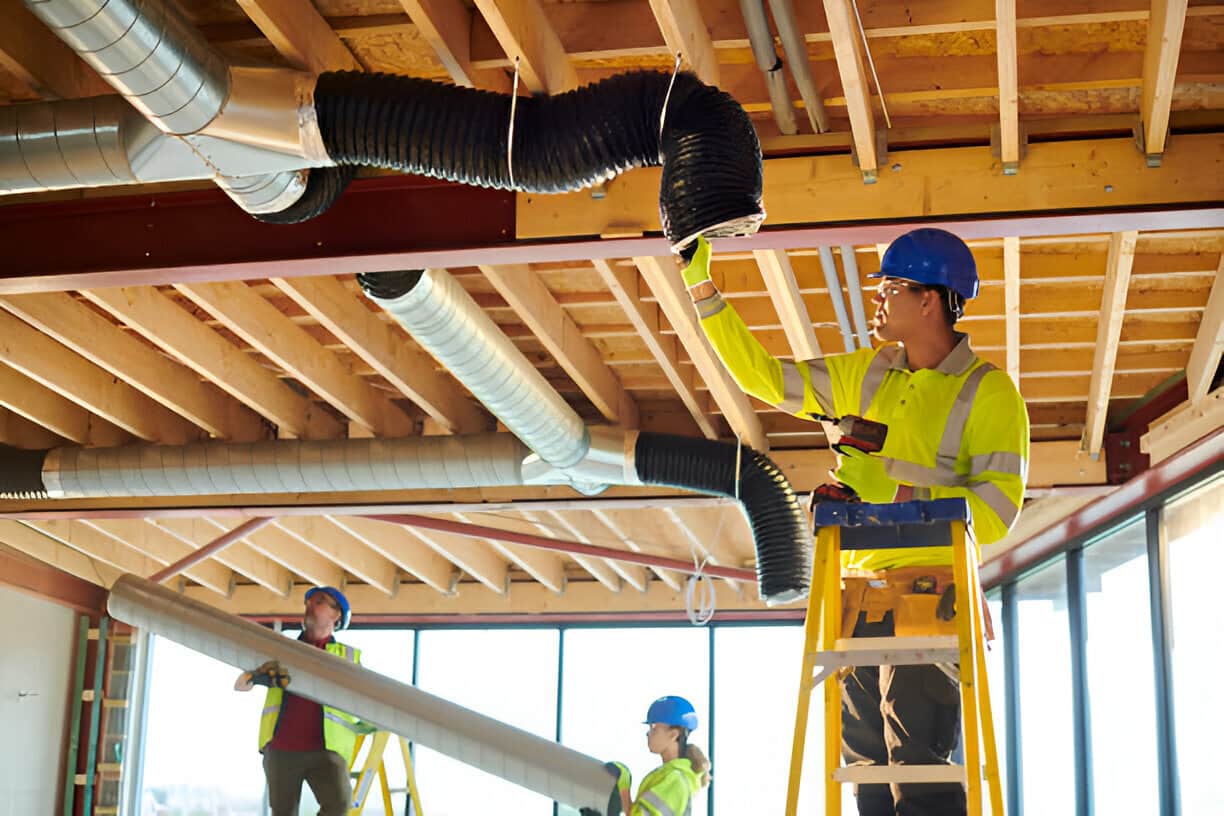
- Best for low leakage and predictable performance; ideal for trunks and higher-velocity runs.
- Flexible duct
- Useful for short, final connections; requires careful routing to avoid kinks and excess length that increase pressure loss.
- Duct liners and external insulation
- Lining can help with noise control; external insulation helps prevent thermal gain in attics. Both must be specified to meet local code and long-term durability needs.
How proper duct design improves comfort and efficiency
- Even temperature distribution reduces hot and cold spots and lessens thermostat cycling.
- Lower static pressure improves system efficiency and extends equipment life by reducing blower strain.
- Reduced leakage and better insulation lower energy bills and improve dehumidification performance—important in Allen’s humid summers.
- Quieter operation and balanced airflow increase occupant comfort and perceived system quality.
Maintenance and long-term performance tips
- Inspect duct seals and insulation annually, especially after major attic work or renovations.
- Keep return grills and supply vents unobstructed; dirty filters and blocked returns dramatically reduce system balance.
- Schedule periodic testing and balancing after any major remodel or HVAC equipment change to verify performance.
- Consider duct sealing if you notice unexplained energy costs, weak airflow in rooms, or uneven temperatures.
Company name mention: Green Tech approaches every duct design project in Allen, TX with a focus on measurable performance and longevity. Our designs emphasize low-pressure-loss routing, proper Manual J/Manual D sizing, and construction-friendly details that protect comfort and efficiency for local homes.
FAQs
Q: What is the difference between Manual J and Manual D in duct design?
A: Manual J is the load calculation that determines the heating and cooling required for each room. Manual D is the duct design standard that uses those loads to size ducts and design the layout so the system can deliver the calculated airflows properly.
Q: Do ducts in attics need special insulation in Allen, TX?
A: Yes. Attic ducts in Allen are exposed to very high summer temperatures, so proper insulation and sealing reduce heat gain, prevent condensation, and maintain cooling efficiency.
Q: How do you measure if ducts are balanced after installation?
A: We measure supply and return airflow at registers, check total system static pressure, and adjust balancing dampers until each room receives the target CFM defined by the Manual J outputs.
Q: Can existing ducts be improved without full replacement?
A: In many cases yes. Sealing, targeted resizing, improving return paths, and rerouting critical runs can significantly improve performance at lower cost than full replacement.
Q: Will better duct design lower my energy bills?
A: Yes. Properly sized, sealed, and insulated ducts reduce energy losses and blower work, improving system efficiency and often lowering monthly heating and cooling costs.

Flexible Financing Options
Explore our range of flexible financing options designed to suit your needs and budget.