





No Cooling Repair in Dallas, TX 75227: Drain Line Blockage, Rusted Drain Pan, and Supply Air Sensor Replacement
When an air conditioning system stops cooling in the middle of a Dallas summer, the root cause is rarely a single failure. In this residential no-cool repair case in Dallas, TX 75227, our technicians identified multiple compounding issues inside the air handler that were preventing proper system operation and risking long-term damage.
This article documents the diagnostic process, technical findings, and professional recommendations, while also educating homeowners and property managers on why condensate drainage, sensor accuracy, and airflow maintenance are critical to reliable cooling performance.
Service Overview (Dallas, TX 75227)
- Primary Complaint: No cooling
- System Type: Split system with indoor air handler
- Location: Dallas, TX 75227
- Occupancy: Tenant-occupied residential property
Diagnostic Findings
After a full operational and visual inspection of the air handler and related components, the following issues were confirmed:
1. Condensate Drain Line Blockage (Debris Buildup)
The condensate drain line showed significant debris accumulation, restricting proper water flow. In cooling mode, the evaporator coil continuously removes moisture from the air. If that water cannot drain properly, it backs up into the drain pan and can eventually trigger safety shutoffs or overflow into surrounding areas.
Risks of an obstructed drain line include:
- System shutdown due to float switch activation
- Water damage to ceilings, walls, or flooring
- Elevated humidity and mold growth inside the unit
Professional Recommendation:
Perform a full drain clearing using industry-approved methods to restore unrestricted condensate flow.
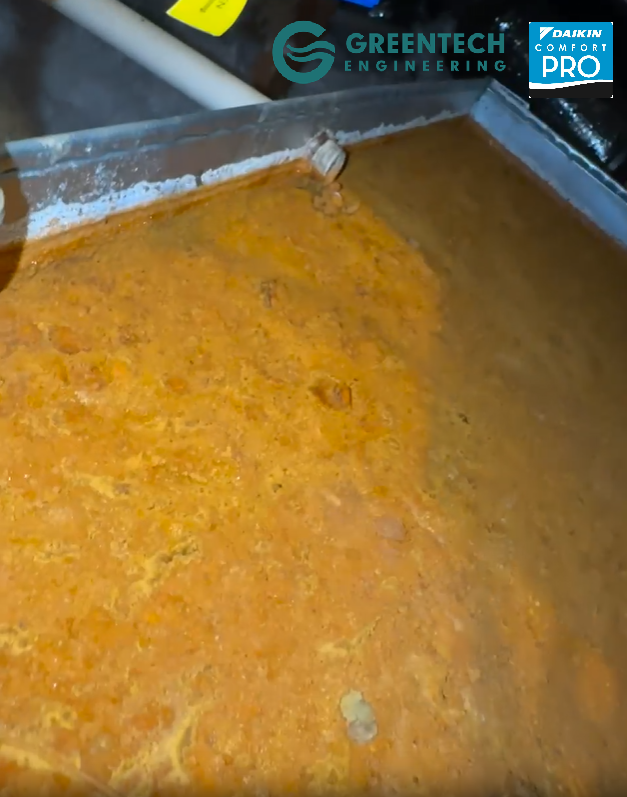
2. Rusted and Deteriorated Drain Pan (Air Handler)
The primary drain pan beneath the evaporator coil was found to be rusted through, indicating long-term moisture exposure and corrosion. Once a drain pan deteriorates, it can no longer reliably contain condensate water—even after the drain line itself is cleared.
Why this matters:
- Rusted pans leak unpredictably
- Patch repairs are not code-compliant or durable
- Continued use risks hidden water damage inside the structure
Professional Recommendation:
Complete air handler drain pan replacement to restore safe and code-compliant condensate management.
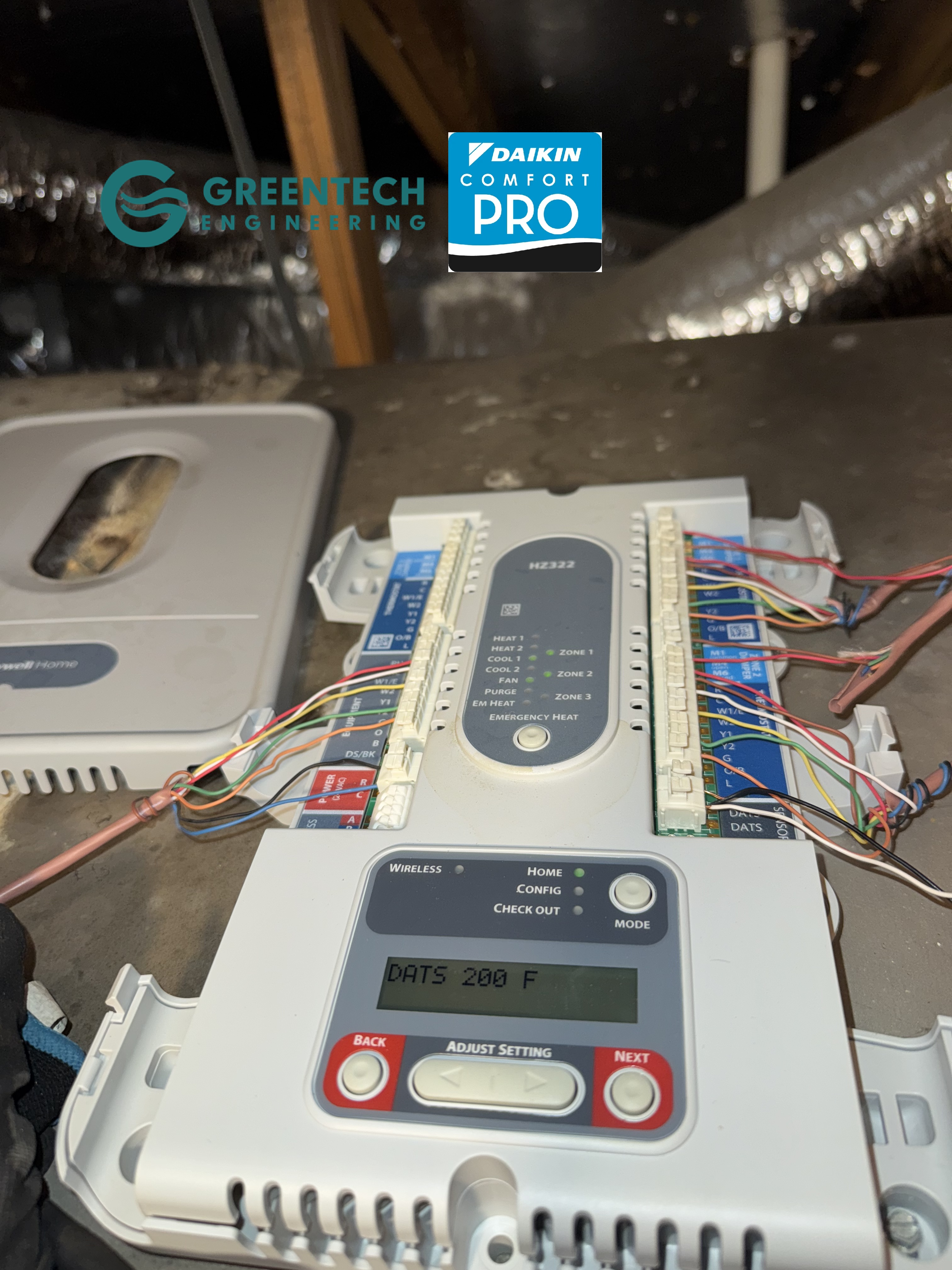
3. Failed Supply Air Zoning Discharge Air Temperature Sensor
The system was equipped with zoning controls, but the supply air discharge temperature sensor had failed. This sensor is critical for communicating real-time supply air temperature to the zoning control board.
When this sensor fails:
- The system may short-cycle or run excessively
- Cooling output becomes inconsistent across zones
- Comfort complaints increase even when the system is mechanically sound
Corrective Action Performed:
Installed a new Honeywell supply air zoning discharge air temperature sensor at the supply plenum, restoring accurate temperature feedback and proper zoning logic.
4. Dirty Air Filter Affecting Airflow
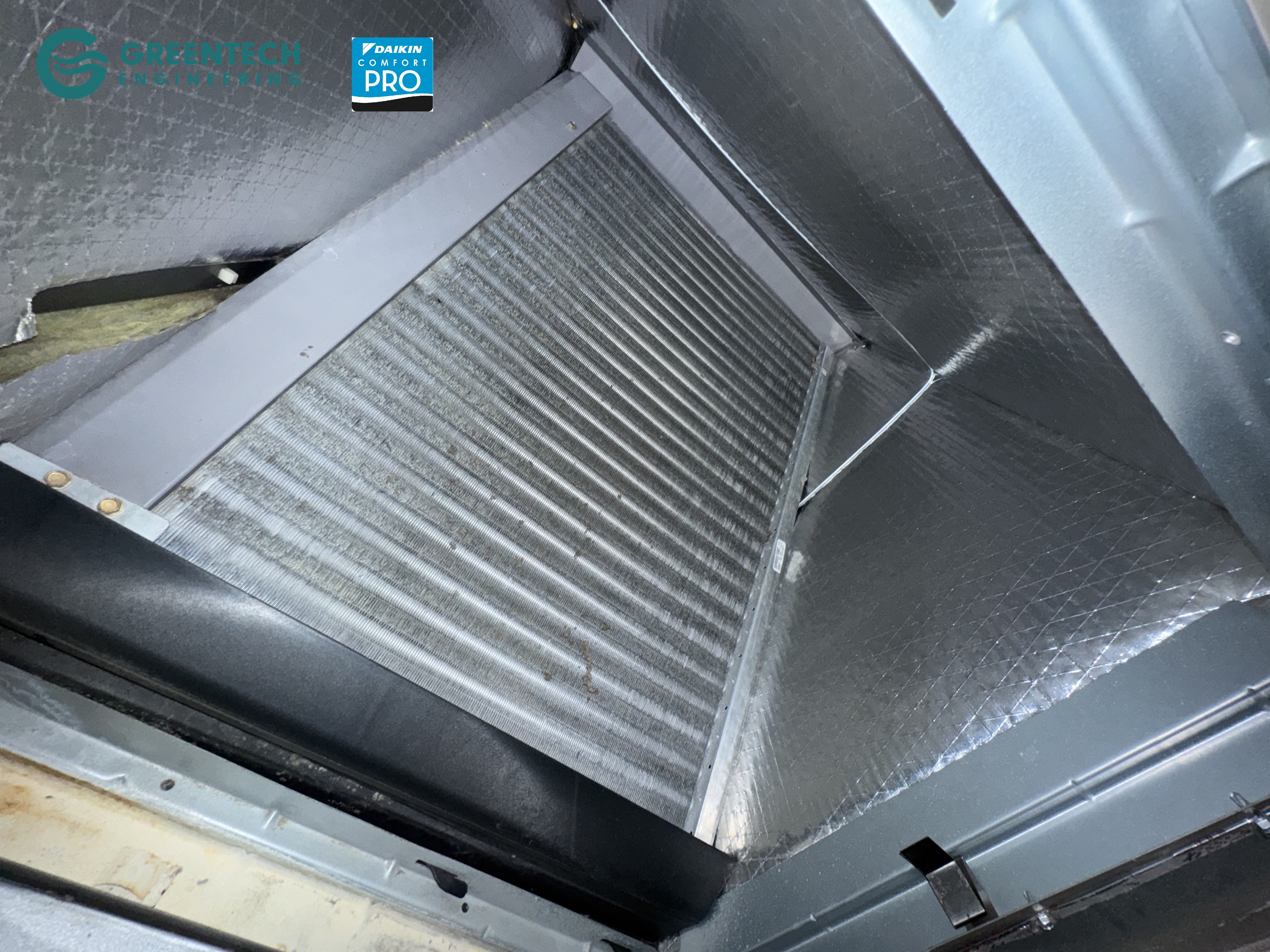
A dirty air filter was also observed during inspection. Restricted airflow reduces heat transfer across the evaporator coil and can contribute to:
- Poor cooling performance
- Coil icing
- Increased strain on the blower motor
Homeowner Education Provided:
The homeowner was informed to replace the air filter promptly and maintain a regular replacement schedule to prevent recurring airflow issues.
Why These Issues Caused “No Cooling”
While each issue alone can reduce performance, their combined effect explains the no-cool condition:
- Blocked drain → water backup and potential system interruption
- Rusted pan → inability to safely manage condensate
- Failed sensor → incorrect system control decisions
- Dirty filter → reduced airflow and heat exchange
This case highlights why professional diagnostics go far beyond “adding refrigerant” or replacing a single part.
Preventive Recommendations for Dallas Homeowners & Property Managers
- Schedule annual air handler inspections, especially before summer
- Clear condensate drains proactively to prevent backups
- Replace air filters every 1–3 months depending on occupancy
- Address sensor faults immediately in zoned HVAC systems
- Never ignore early signs of rust or water inside the unit
Preventive maintenance is significantly less expensive than repairing water damage or replacing major HVAC components.
Frequently Asked Questions (Q&A)
Q1: Can a clogged drain line really stop my AC from cooling?
Yes. Many systems include float switches that shut down cooling when water backs up, preventing overflow damage.
Q2: Is a rusted drain pan repairable?
In most cases, no. Once corrosion penetrates the pan, replacement is the only reliable and code-compliant solution.
Q3: What does a supply air temperature sensor do?
It measures the temperature of air leaving the air handler and helps the control board regulate runtime, staging, and zoning decisions.
Q4: How often should air filters be replaced in Dallas?
Typically every 30–60 days during peak cooling season due to higher dust, pollen, and runtime.
Q5: Is this type of repair common in tenant-occupied homes?
Yes. Filters and drains are often overlooked, making regular professional inspections especially important for rental properties.
Author
Siwei (Lucas) Chen
CTO | Greentech Engineering Heating & Air Conditioning
B.S. Mechanical Engineering – Virginia Tech
ACCA Certified (Manual J, S, D)
NCI Certified – Air Balancing & Duct Optimization
Daikin Comfort Pro Contractor
Lucas Chen specializes in diagnosing complex airflow, moisture, and control issues in residential HVAC systems across the Dallas–Fort Worth metroplex. All technical content in this article has been reviewed for accuracy and field relevance.
Know more about ACCA

Flexible Financing Options
Explore our range of flexible financing options designed to suit your needs and budget.