



🏠 Hot Upstairs, Cold Downstairs in Dallas?
Why the Fix Isn’t a Bigger AC — It’s Engineering
If you live in a two-story home in Dallas–Fort Worth, you’ve probably experienced this frustrating pattern:
- ❄️ Downstairs feels cold
- 🔥 Upstairs never cools down
- 💸 Energy bills keep climbing
- 💦 The air feels clammy instead of comfortable
Most homeowners are told the same thing: “You need a bigger air conditioner.”
In North Texas, that advice is not just wrong — it often makes the problem worse.
At Greentech Engineering Heating & Air Conditioning, we take an engineering-driven approach to comfort. We don’t guess. We calculate, design, and verify — using the ACCA Gold Standard for residential HVAC design.
The Real Problem in DFW Homes: Oversizing & Guesswork
In the hot, humid Dallas climate, comfort is not just about temperature — it’s about humidity control and airflow balance.
Why Bigger AC Systems Fail in Texas
An oversized system:
- Cools the air too quickly
- Shuts off before removing enough humidity
- Creates short cycling, higher wear, and higher bills
- Leaves homes cold but sticky
This is especially common in Allen, Plano, Frisco, McKinney, and Little Elm, where many two-story homes were built with:
- Rule-of-thumb sizing
- Undersized return air
- Poorly designed duct layouts
The Engineering Solution: ACCA Manual J, S & D (JDS)
At Greentech Engineering, we design every split system using the industry-recognized ACCA standards — not shortcuts.
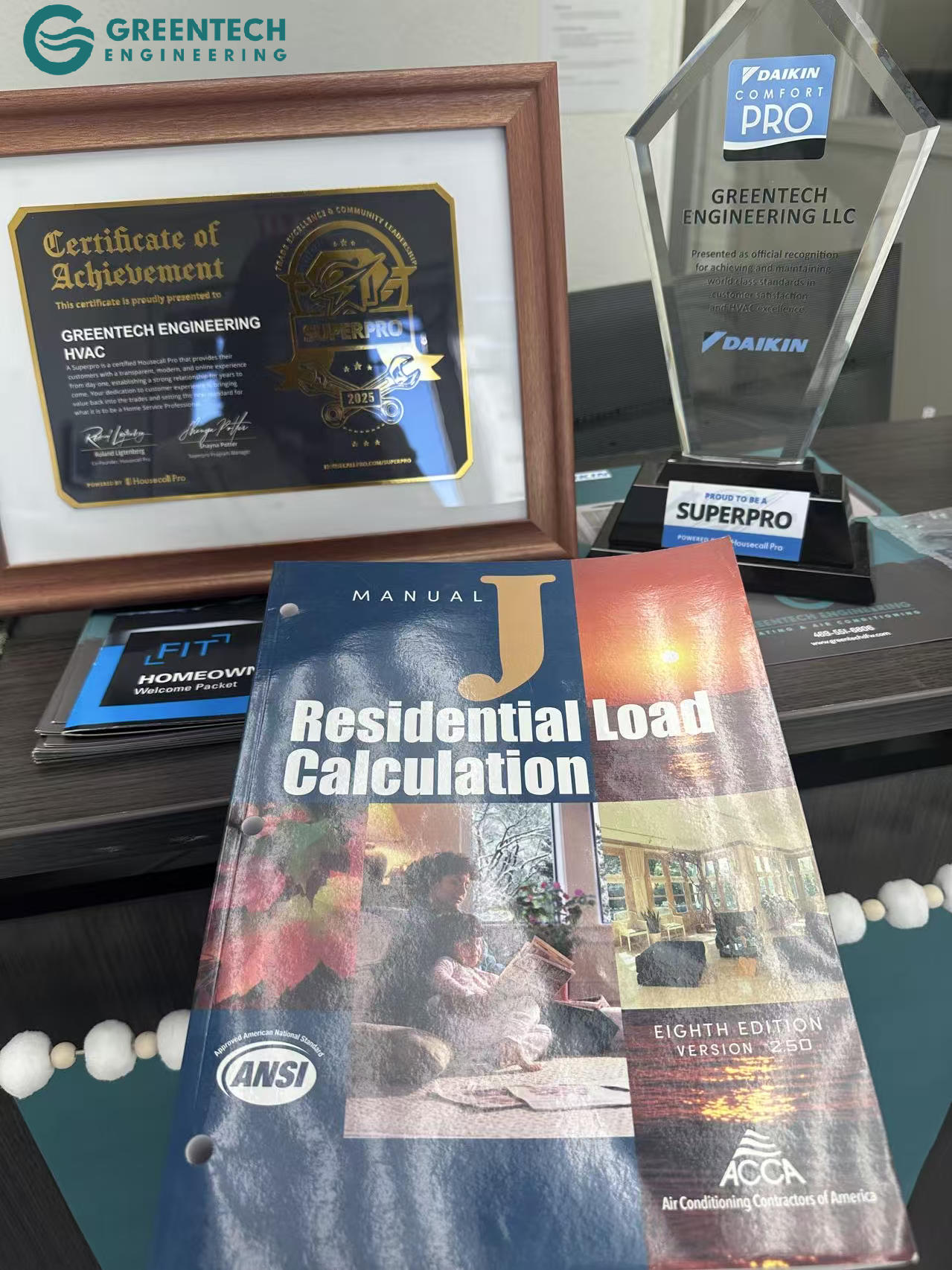
🔍 Manual J — Load Calculation (The Diagnosis)
Manual J determines the exact heating and cooling load your home needs, room by room, based on:
- Square footage & ceiling height
- Insulation levels
- Window size, type & orientation
- Air leakage
- Occupancy & internal heat gains
📊 Fact: Many homes in the DFW area are oversized by 20–40%.
Real-World Example (Allen, TX):
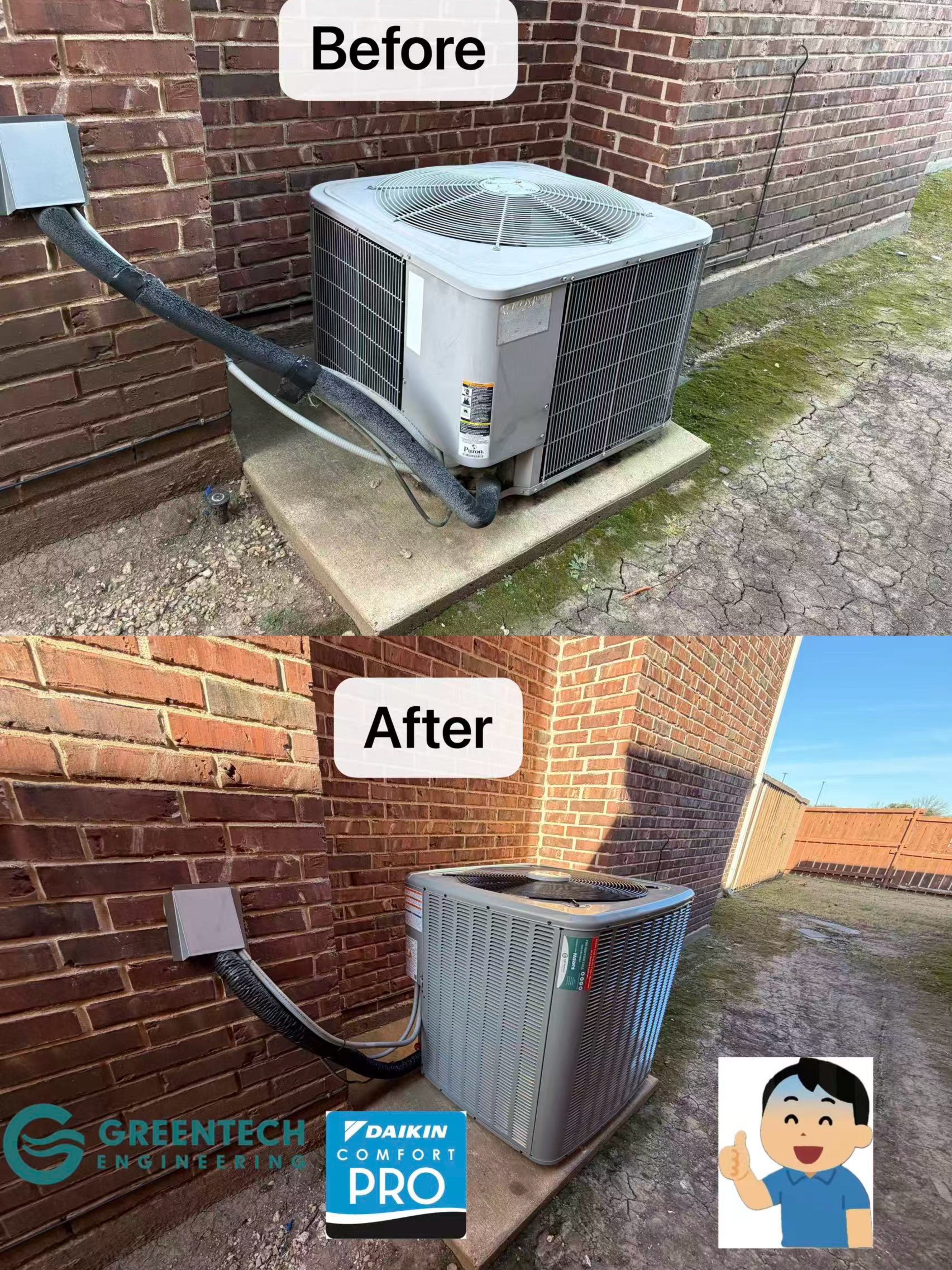
A homeowner was quoted a replacement 3-ton system by multiple contractors. Our Manual J showed the home only needed 2.5 tons.
✔ Better humidity control
✔ Lower upfront cost
✔ Qualified for Oncor energy incentives
⚙️ Manual S — Equipment Selection (The Prescription)
Manual S ensures the specific equipment model:
- Matches both sensible (temperature) and latent (humidity) loads
- Performs correctly in Dallas extreme summer conditions
- Operates efficiently at partial loads — where systems run most of the time
This is where many contractors fail: they pick a size, not a performance-matched system.
🌬️ Manual D — Duct Design (The Delivery System)
Even the best equipment fails with poor airflow.
Manual D focuses on:
- Proper duct sizing
- Correct return air placement
- Balanced airflow to second floors
- Quiet, low-static operation
🔥 Hot upstairs?
In most cases, the issue is duct design and return air, not equipment capacity.
Why Engineering Matters More in Two-Story Homes
Two-story homes are thermally complex:
- Heat rises
- Solar gain differs by floor
- Static pressure builds quickly
- Poor returns starve upstairs rooms
Without Manual D, contractors often:
- Reuse undersized ducts
- Skip adding returns
- Mask problems with larger equipment
We fix the root cause, not the symptom.
Oncor Incentives: Engineering = Eligibility
Most Oncor Home Energy Efficiency incentives require:
- Proper system sizing
- Verified performance improvements
- Documentation — not guesswork
Because our designs are data-driven, many Greentech projects qualify for rebates that oversized systems do not.
We are Oncor service provider and could help apply the rebate.
Why Homeowners Across DFW Choose Greentech Engineering
- ✔ Engineering-first HVAC design
- ✔ ACCA Manual J, S & D compliance
- ✔ Single-family home specialists
- ✔ Proven results in North Texas climate
- ✔ Oncor Authorized Service Provider
- ✔ Daikin Comfort Pro Certified
- ✔ Transparent, documented calculations
If a contractor isn’t performing all three manuals, they are guessing.
Frequently Asked Questions (FAQ)
❓ Why is my upstairs always hotter than downstairs?
Usually due to poor duct design, inadequate return air, or incorrect system sizing — not a lack of cooling capacity.
❓ Can a smaller AC really cool better?
Yes. Properly sized systems run longer cycles, remove more humidity, and deliver more consistent comfort.
❓ Do all contractors perform Manual J?
No. Many skip it due to time or lack of training. It is the most commonly skipped — and most important — step.
❓ Is Manual J required for rebates?
Often, yes. Proper sizing and documentation are key for Oncor incentive eligibility.
❓ Is this only for new systems?
No. Manual JDS applies to replacements, upgrades, and comfort corrections in existing homes.
Serving Dallas–Fort Worth Homeowners
📍 Service Areas:
Allen • Plano • Frisco • McKinney • Little Elm • Carrollton • North Dallas • DFW Metroplex
📞 Stop guessing. Start engineering.
Contact Greentech Engineering Heating & Air Conditioning for a data-driven HVAC assessment designed for Texas homes.
Author & Technical Review
Lucas Chen
CTO & Lead HVAC Engineer — Greentech Engineering
B.S. Mechanical Engineering
ACCA Certified (Manual J, S & D)
NCI Certified – Air Balancing & Duct Optimization
Daikin Comfort Pro Contractor
Oncor Service Provider
10+ Years Residential HVAC Engineering Experience in Dallas–Fort Worth
This article was reviewed and approved to ensure technical accuracy, compliance with ACCA standards, and alignment with North Texas climate conditions.

Flexible Financing Options
Explore our range of flexible financing options designed to suit your needs and budget.